Ekstrakcja kawy: Dlaczego Twoja kawa jest gorzka lub kwaśna?

Paweł Horzela
Ekstrakcja brzmi jak termin z laboratorium, ale to po prostu proces rozpuszczania składników kawy w wodzie. To moment, w którym woda przejmuje od ziarna aromaty, cukry i kwasy, budując profil smakowy w Twojej filiżance.
Bez zrozumienia ekstrakcji, parzenie kawy to rzut kostką – czasem wyjdzie świetnie, czasem fatalnie, ale rzadko wiesz dlaczego. Opanowanie tego procesu to klucz, który pozwoli Ci świadomie korygować błędy i powtarzać najlepsze efekty.
Kolejka po smak: Co wydobywa się pierwsze?
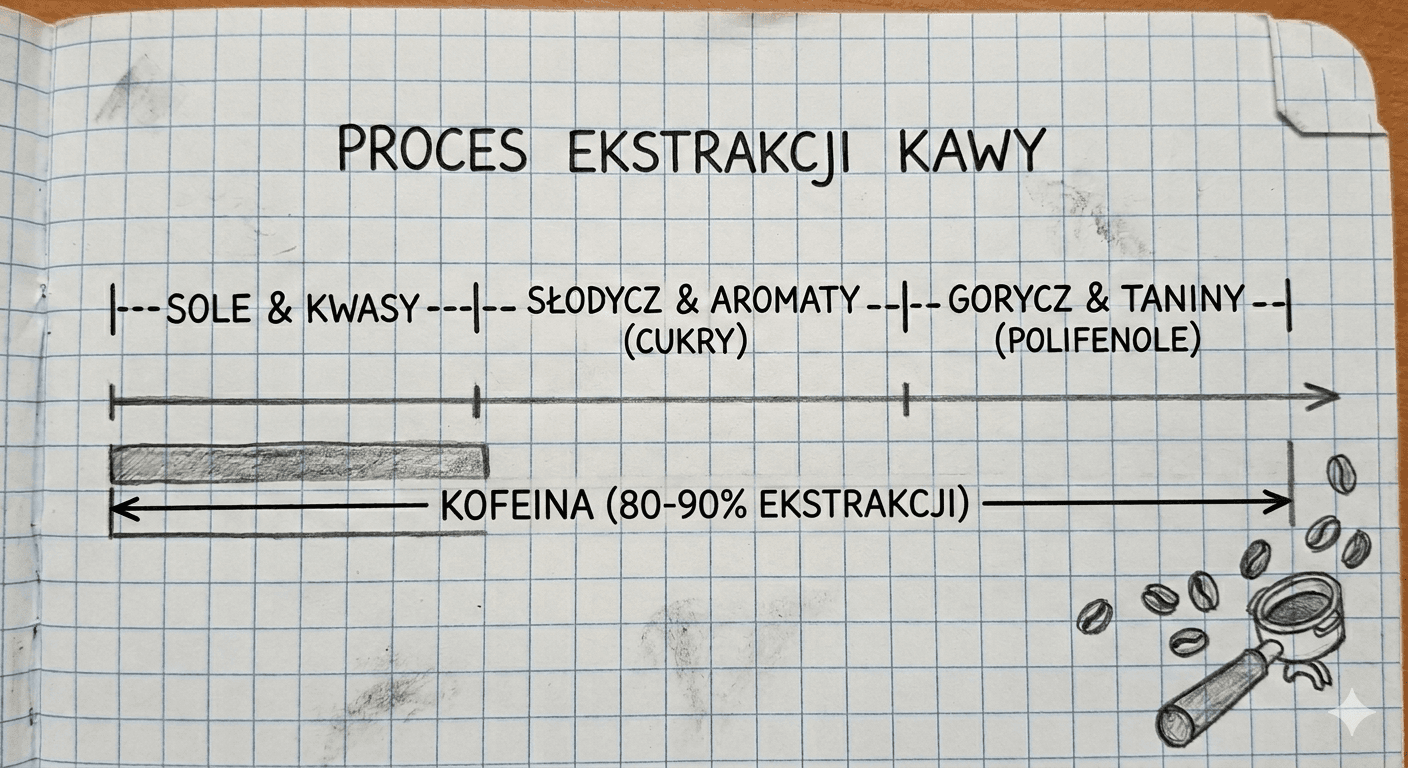
Woda nie wyciąga wszystkiego jednocześnie. Smaki w kawie „stoją w kolejce”, a czas parzenia decyduje o tym, jak głęboko w tę kolejkę wejdziemy. Oto kolejność:
- Najpierw: Kwasy i sole. Rozpuszczają się najszybciej. Dają kawie owocową rześkość, ale jeśli proces przerwiemy zbyt wcześnie, napar będzie agresywnie kwaśny, nieprzyjemnie cierpki, a nawet słony (bo nie zdążyła go jeszcze "przykryć" słodycz).
- Potem: Cukry. To „złoty środek”. Słodycz pojawia się po chwili, wypełnia body (teksturę) naparu i balansuje początkową kwasowość. To tutaj dzieje się magia specialty.
- Na końcu: Gorycz i cierpkość. Jeśli woda zbyt długo „męczy” ziarna, zaczyna wypłukiwać ciężkie związki organiczne i polifenole. Efektem jest piołunowa gorycz i uczucie suchości na języku.
Mit kofeiny: Wiele osób myśli, że im bardziej gorzka i "smolista" kawa, tym mocniejsze pobudzenie. Błąd! Kofeina jest niezwykle łatwo rozpuszczalna – trafia do filiżanki już w pierwszej fazie parzenia. Wydłużanie ekstrakcji powyżej normy dodaje jedynie nieprzyjemnej goryczy, a nie realnej mocy.
Suwak ekstrakcji: Jak sterować smakiem?
Wyobraź sobie, że masz w ręku suwak. Przesuwając go, decydujesz, ile dobra wyciągniesz z kawy. Możesz nim manipulować za pomocą trzech głównych parametrów:
| Parametr | Większa ekstrakcja (w stronę goryczy) | Mniejsza ekstrakcja (w stronę kwasowości) |
|---|---|---|
| Mielenie | Drobniejsze (większa powierzchnia kontaktu wody z kawą) | Grubsze (woda swobodniej przepływa między drobinami) |
| Temperatura | Wyższa (woda szybciej i agresywniej rozpuszcza cząsteczki) | Niższa (proces zachodzi wolniej i delikatniej) |
| Czas kontaktu | Dłuższy (np. French Press parzony 4-6 minut) | Krótszy (np. szybki, dynamiczny Drip) |
Diagnostyka: Jak uratować swoją kawę?
Zamiast wylewać nieudaną kawę do zlewu, potraktuj ją jako lekcję na jutro. Twój język to najlepszy przyrząd pomiarowy:
- Twoja kawa wykręca buzię kwasowością i wydaje się słona? Jest niedoparzona (under-extracted). Woda wyciągnęła kwasy i sole, ale zabrakło jej czasu na wydobycie słodyczy. Następnym razem zmiel ziarna drobniej lub użyj cieplejszej wody.
- Twoja kawa jest sucha, ściągająca i popiołowa? Jest przeparzona (over-extracted). Następnym razem zmiel ziarna grubiej, skróć czas parzenia lub obniż temperaturę wody o 2-3 stopnie.
Pro Tip: Czas to tylko połowa sukcesu
Często słyszymy: „parz V60 dokładnie 3 minuty”. Pamiętaj jednak, że czas to zazwyczaj efekt tego, jak drobno zmielisz kawę. Jeśli zmielisz ziarna na pył, woda będzie przez nie płynąć bardzo długo, dając gorzki napar. Jeśli zmielisz jak grubą sól, woda przeleci błyskawicznie, dając wodnisty kwas. Zawsze traktuj stopień mielenia i czas parzenia jako parametry, które wzajemnie na siebie wpływają.
Zacznij słuchać filiżanki
Ekstrakcja to nie fizyka kwantowa – to uważna obserwacja. Każda filiżanka wysyła Ci sygnał. Jeśli jest zbyt agresywna – „odpuść” parametry. Jeśli wydaje się niedojrzała i zbyt kwaśna – „dociśnij” je. Zrozumienie tego procesu sprawi, że przestaniesz parzyć kawę na oślep, a zaczniesz projektować jej smak.
Teoria to jedno, ale jak ją naprawić w praktyce? Oto złoty środek i sposoby na troubleshooting.
Chcesz poczuć niuanse ekstrakcji? Dowiedz się, jak zacząć czuć więcej dzięki sensoryce.